Our current economy runs on a simple and deeply flawed loop: take resources from the earth, make something, use it, throw it away. We call this the linear economy — and its costs keep climbing. Landfills are filling up, waste management is getting more expensive, and the environmental toll of extracting new materials keeps growing.
The circular economy is a different way of thinking. Instead of a straight line ending in a bin, it’s a loop — one where products and materials stay in use as long as possible, and waste is the last resort rather than the expected outcome.
To make the circular economy tangible, we start where we are. weRcircular is based in Stouffville, Ontario, and we launched this campaign by spotlighting local businesses already putting these principles into practice — not because circularity is unique to Stouffville, but because every community has businesses like these.
In places like Stouffville, and wherever you are, the loop is already turning. Local businesses are repairing appliances, recovering construction materials, refilling cleaning products, and growing food with minimal packaging. Most of them have never called themselves “circular economy businesses.” But that’s exactly what they are.
This post introduces the Rs — a hierarchy of circular economy actions that keeps materials and products out of landfill. Understanding the Rs is the first step toward making more intentional choices, whether you’re a consumer, a community member, or a business owner.
The funnel: why not all circular actions are equal
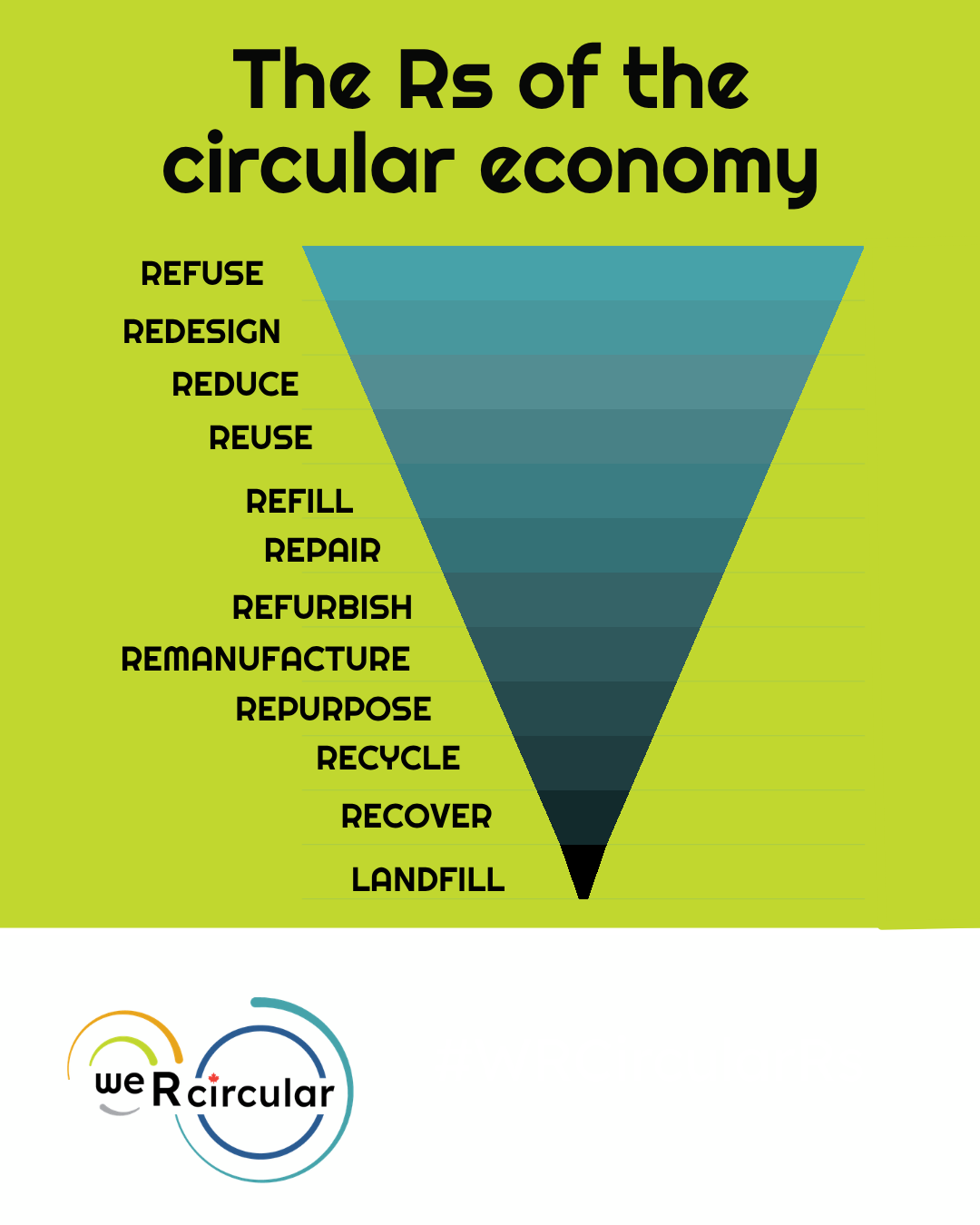
The Rs aren’t a flat list. They form a hierarchy. Where an R-action sits in that hierarchy tells you how much value it preserves.
Think of it as a funnel. At the top, you keep the most value — the product stays intact, no energy is spent reprocessing it, and nothing is lost. As you move down the funnel, more value is lost at each step. At the very bottom sits landfill: all value gone, all resources wasted, a cost to the environment and the public purse.
The goal of the circular economy is to act as high up the funnel as possible, as often as possible. Recycling — which most of us already do — sits near the bottom of that funnel. That’s not a criticism of recycling–there’s a time and place for it, too. It’s just an invitation to go further.
Source: Circularise R-strategies
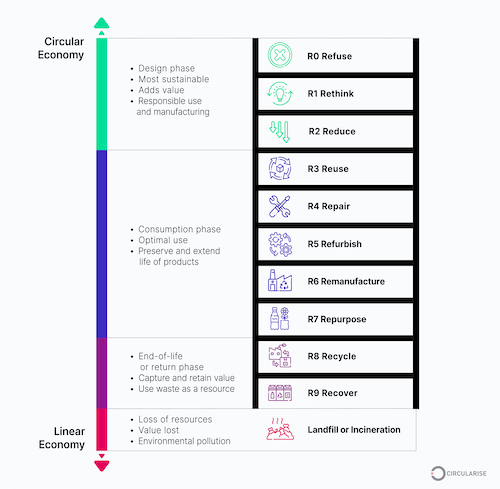
The R-strategies used in this campaign are grounded in a globally recognised framework. Researchers and organisations like Circularise document ten strategies — R0 through R9 — where R0 (Refuse) represents the highest-value action and R9 (Recover) the lowest before landfill. weRcircular used this framework as the foundation for our social media campaign, though we chose to present the Rs in reverse order — starting at landfill and counting up to Refuse — to show how each step gains in value. In this blog, we’ve reversed that sequence so the most impactful actions come first.
Below are the Rs, from the top of the funnel down.
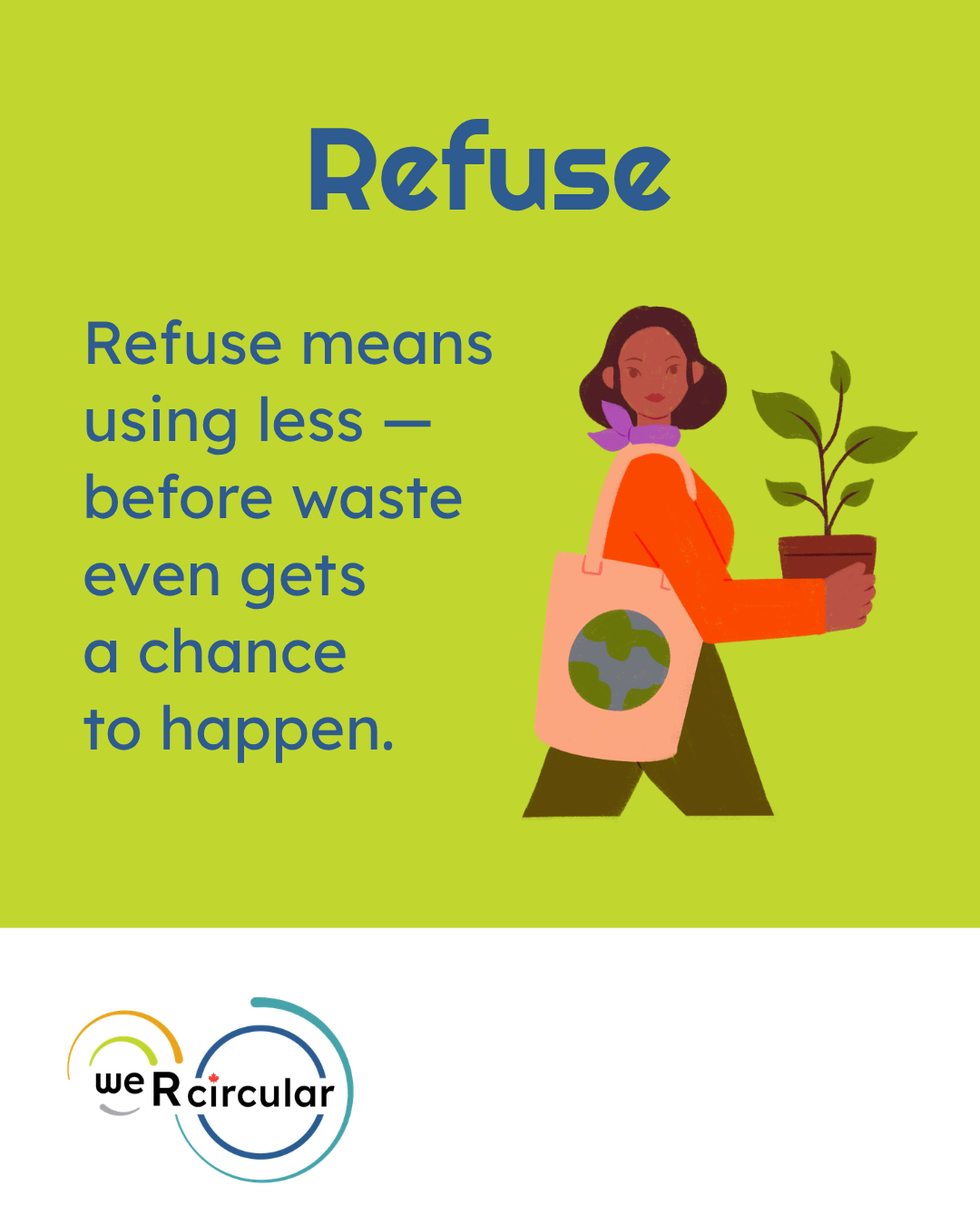 Refuse
Principle: Avoid single-use plastics, short-lifespan products, and materials that cannot be recycled or reused. Less packaging. Fewer resources. Smarter from the start.
Refusing is the most powerful circular action because it prevents waste before it happens. No manufacturing, no processing, no disposal — just a choice not to bring unnecessary materials into circulation in the first place.
In Stouffville: Reesor’s Farm Market builds refusal into how they operate by limiting the use of non-renewable resources in every aspect of their business. They encourage reusable shopping bags, offering compostable and recyclable paper bags when needed.They use biodegradable film only where packaging is genuinely needed. They even source locally, reducing transport emissions. Field to shelf, with as little in between as possible.
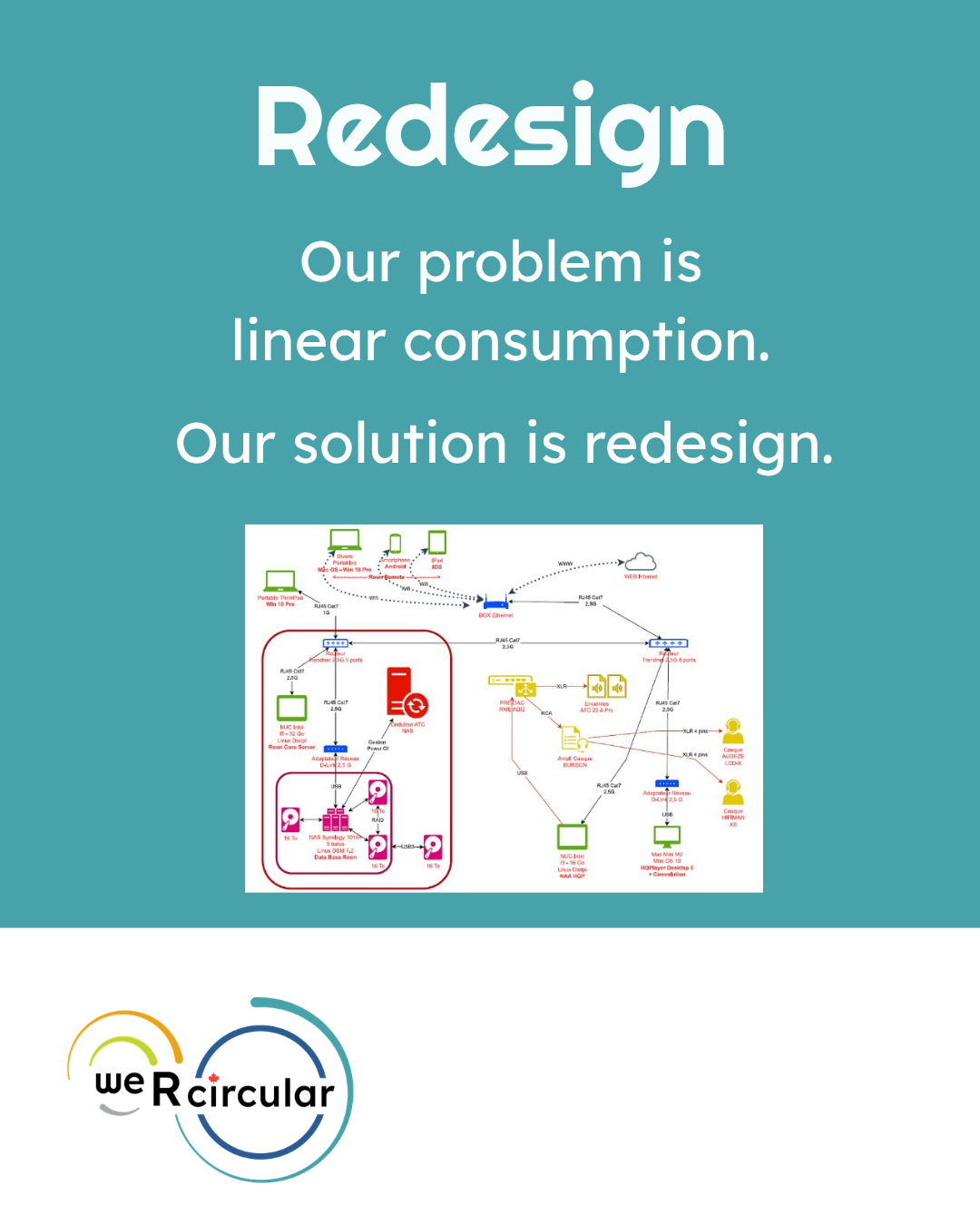 Redesign
Principle: Reconsider the product itself — its materials, its packaging, its entire lifecycle — so that waste is designed out from the beginning.
Redesign is intentional. A business that redesigns isn’t reacting to waste after the fact — it’s engineering circularity into the product before it reaches a single customer. This is the ideal product: one that creates no waste because it was designed NOT to.
In Stouffville: Goodwash Soap produces non-toxic, biodegradable soaps in reusable and refillable packaging made from 100% recyclable aluminum — a material whose molecular structure doesn’t break down when recycled, meaning it can cycle endlessly. Their take-back program keeps containers in circulation, and 5% of sales support Canadian charities.
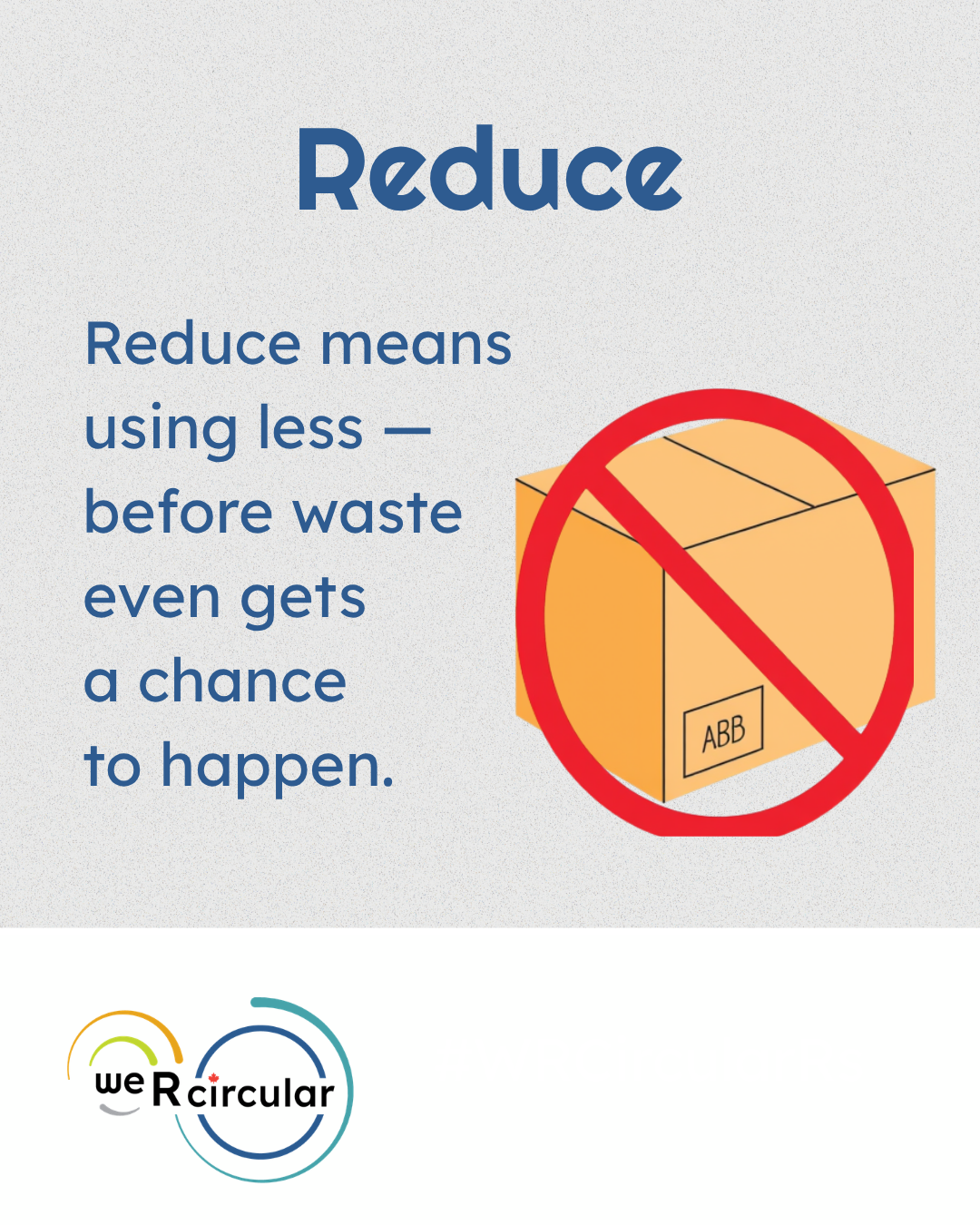 Reduce
Principle: Use less — before waste gets a chance to happen. Decrease the use of raw materials by renting, borrowing, or sharing instead of buying new.
Reducing is about rethinking ownership. Not every tool needs to be purchased. Not every piece of equipment needs to sit in a garage between uses. When communities share resources, everyone uses less — and saves money doing it.
In Stouffville: York Region’s Lendery located at the Stouffville Library— sometimes called a “library of things” — gives residents free access to tools, small appliances, sports equipment, and other items they need occasionally but don’t need to own. No money spent on items used once. No storage required. No extra resources consumed producing something new.
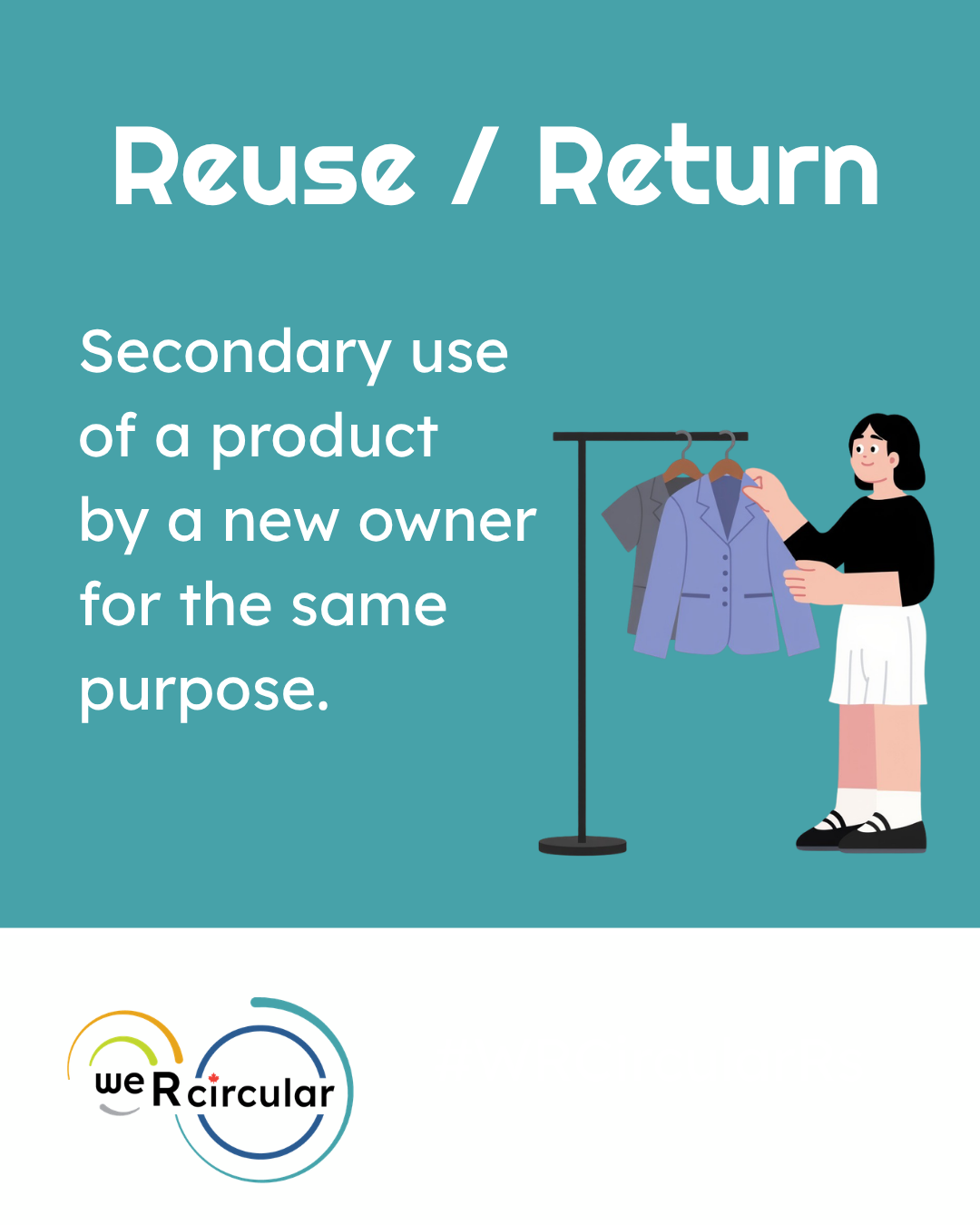 Reuse
Reuse
Principle: Secondary use of products by another owner for the same purpose. No reprocessing required — the item simply changes hands and continues doing what it was made to do.
Reuse keeps value in circulation without any manufacturing energy. A piece of furniture, a piece of clothing, a household item — when it finds a new home instead of a landfill, its full remaining value is preserved.
In Stouffville: MCC Care & Share Thrift Shop keeps that value moving through the community. Approximately 1.1 to 1.3 million tonnes of clothing end up in Canadian landfills each year. Every donation and purchase at Care & Share is a vote against that number — and every dollar goes back into the community.
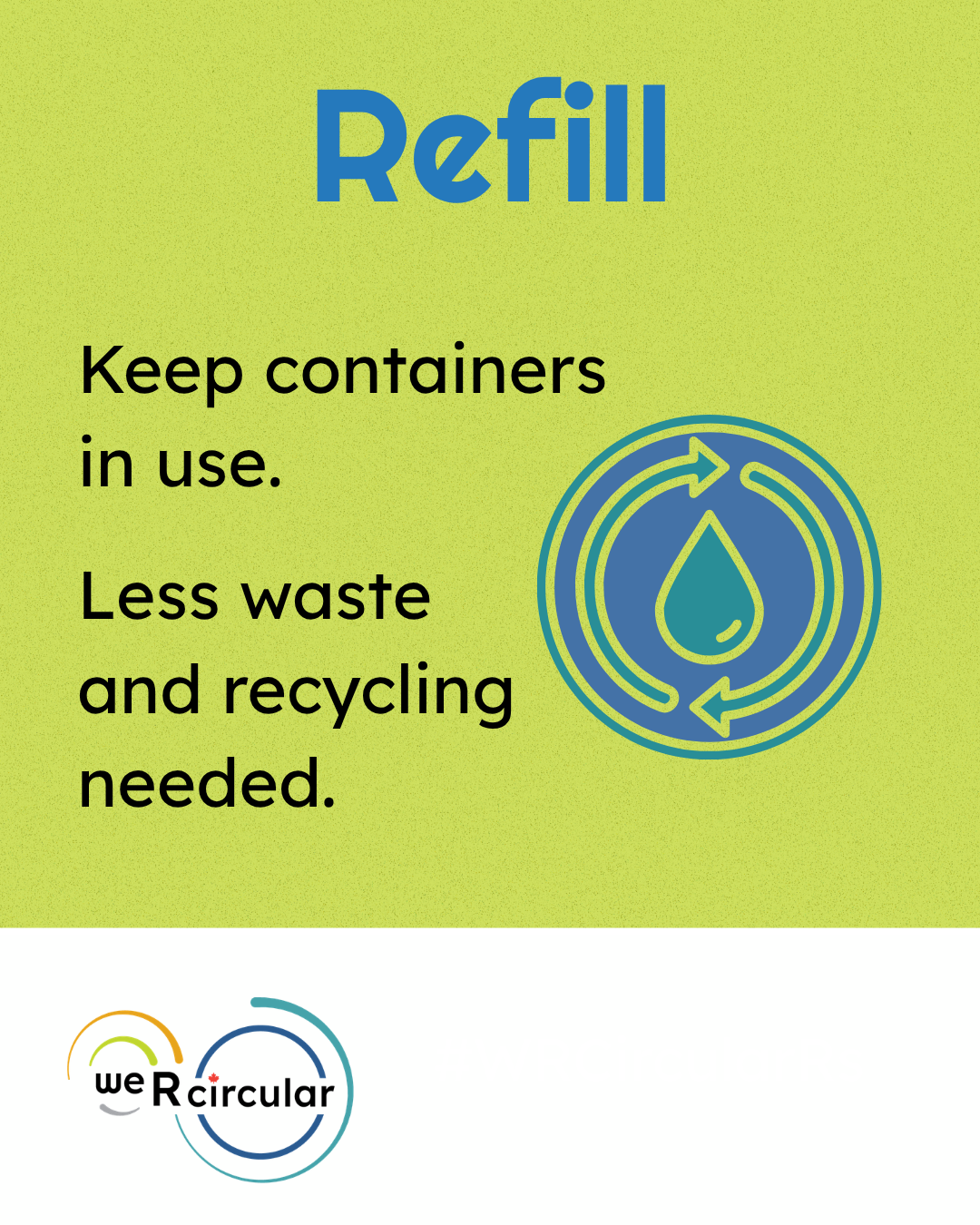 Refill
Principle: Extend the life of containers by refilling them rather than replacing them. The container stays. Only what’s inside gets replenished.
Refill sits alongside Reuse because the logic is the same: no need to alter or reprocess the material. The value of the container is preserved simply by using it again.
In Stouffville: Schell Country Depot Refillery on Edward Street carries PURE’s refill program — laundry detergents, household cleaners, and liquid hand soaps. PURE uses returnable 20-litre containers that are collected, cleaned, and reused, keeping materials in circulation. Bring your own container. Refill it. Repeat.
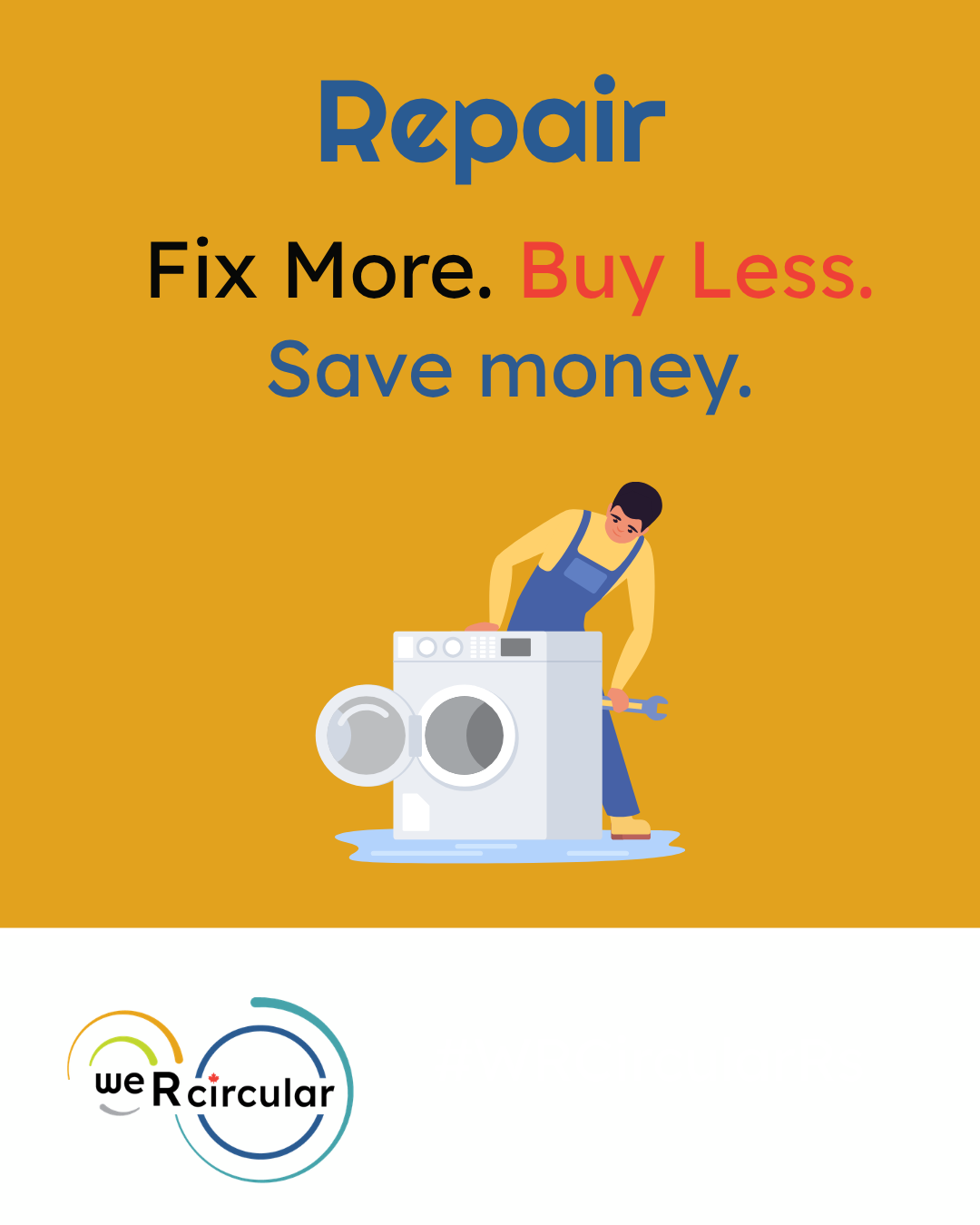 Repair
Principle: Maintain and repair existing products to extend their useful life. Fix more. Buy less. Save money.
Repair is intuitive — most of us would rather fix something than replace it, especially if the cost of repair is reasonable. The challenge is that many products are designed to be unrepairable. Planned obsolescence — building products that fail on schedule — makes repair difficult and expensive by design.
Canada’s Right to Repair legislation aims to change that, requiring manufacturers to provide the parts, tools, and diagnostic software needed to fix electronics, appliances, and vehicles. It’s a policy shift with real circular economy implications.
In Stouffville: Randy’s Refrigeration and Appliance Services is a family-run business with 48 years of experience keeping appliances out of landfill. When your fridge or washing machine breaks down, Randy’s fixes it — so it stays in your home rather than ending up in the scrap yard.
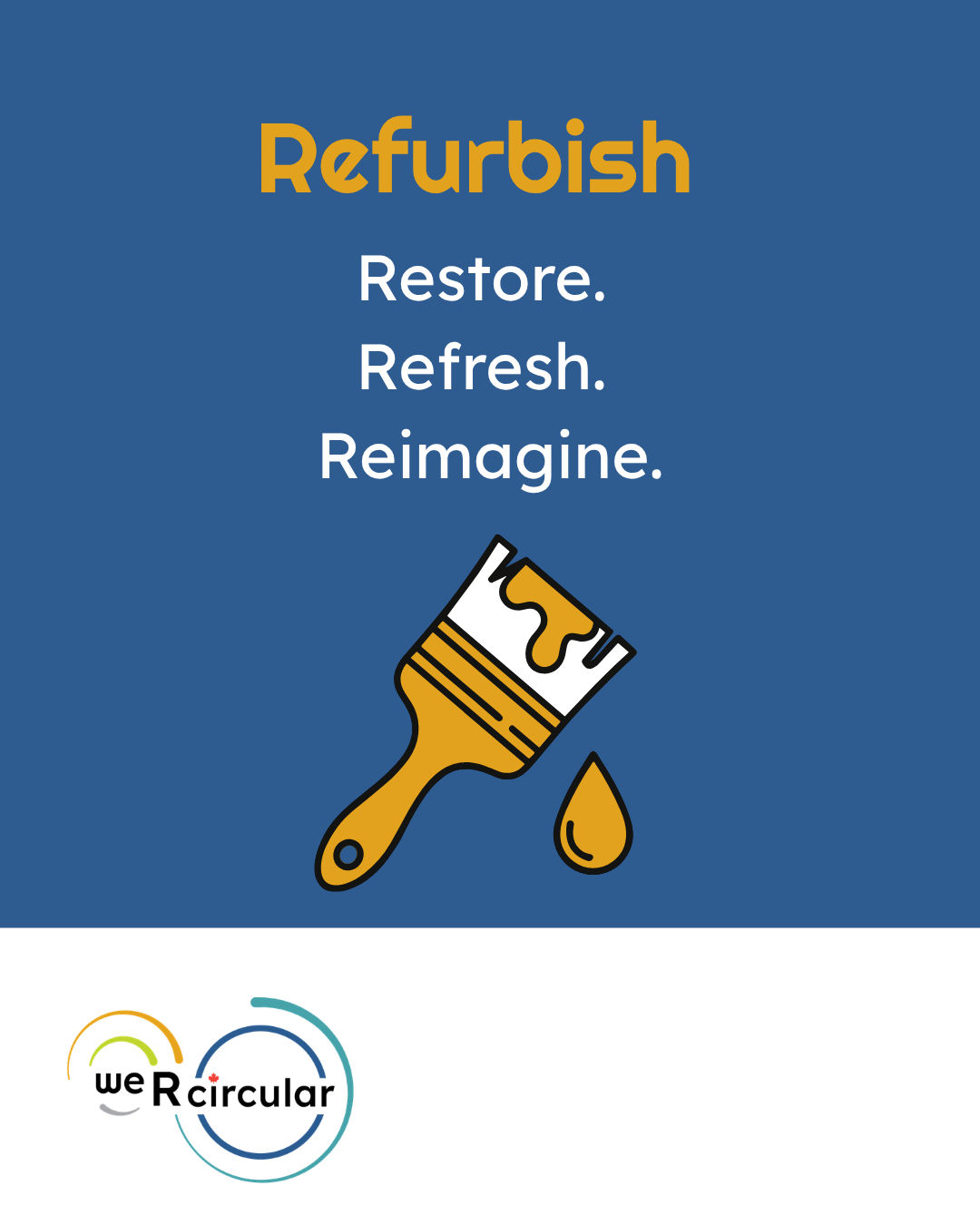 Refurbish
Principle: Restore and improve products to a better condition for extended use. Not just fixing what’s broken — refreshing what’s worn.
Refurbishing goes further than repair. It returns a product to a better-than-original condition, often with aesthetic improvements alongside functional ones. It extends the life of existing materials and reduces the need for new resources.
In Stouffville: Refresh Cabinet Refinishing transforms worn or outdated cabinets into modern, refreshed spaces. By restoring and refinishing instead of replacing, they extend the life of existing materials — and open up conversations about sustainability and circularity with every kitchen they touch.
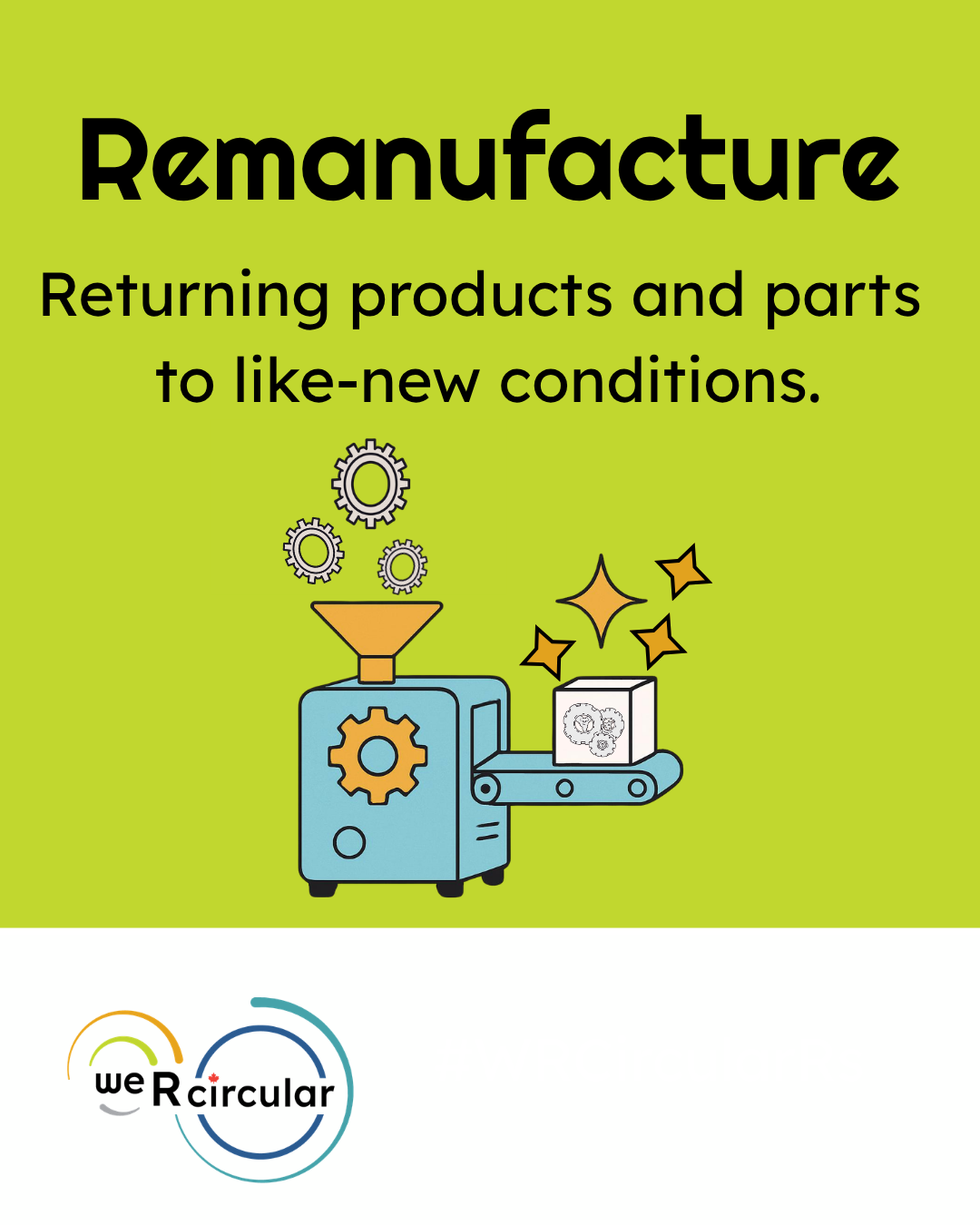 Remanufacture
Principle: Rebuild a product using a combination of reused, repaired, and new parts to meet or exceed the original manufacturer’s specifications. The result can be as good — or better — than the original.
Remanufacturing is more involved than refurbishing. It takes a product apart, restores or replaces its components, and reassembles it to like-new performance. It supports skilled employment, extends product lifecycles, and keeps materials out of the waste stream far longer than recycling would.
In Stouffville: E.R.I. Group Members can rebuild your worn out or poor performing engine bringing it back to life as good or better than new, using trusted remanufactured parts. This saves money, conserves materials, and reduces vehicles being sent to the scrap yard before it’s necessary.
Their Canadian membership network is owned and controlled by the members, another important circular economy principle!
E.R.I. Group Members rebuild engines for many markets to include automotive, marine, light truck, heavy truck, agricultural, industrial, and high performance.
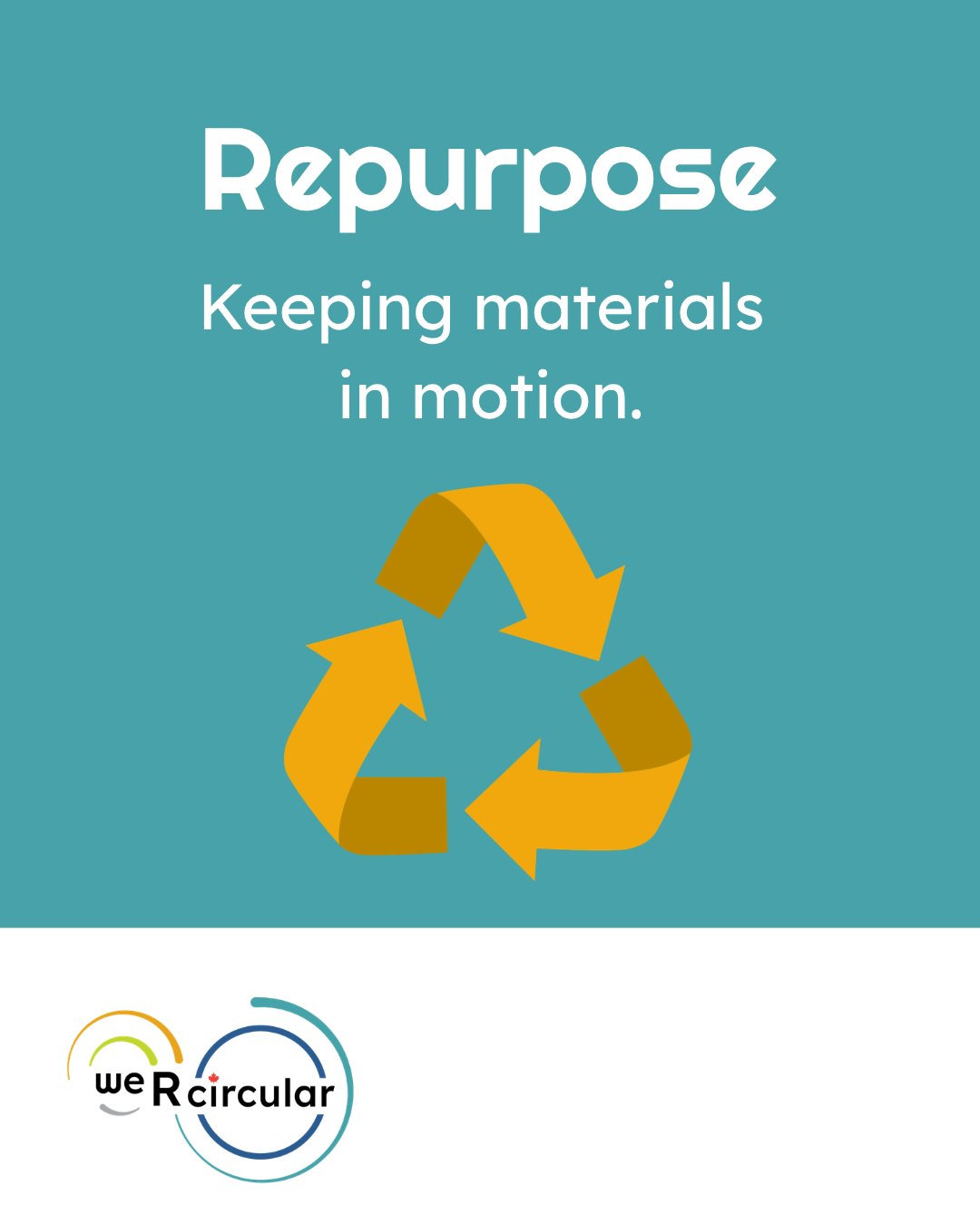 Repurpose
Principle: Give discarded products or materials a new purpose — different from their original use, but meaningful and intentional. This is a step above recycling because there’s a targeted outcome for the material, not just a processing stream.
Repurposing keeps materials in motion. Rather than breaking something down into raw material, it finds new value for what already exists — often with less energy and fewer resources than reprocessing would require.
In the GTA: Ouroboros Deconstruction replaces demolition with deconstruction — carefully taking apart buildings to recover quality materials like wood, trim, and doors for reuse. Their work keeps building materials out of landfill and gives them a second life in new construction and renovation projects.
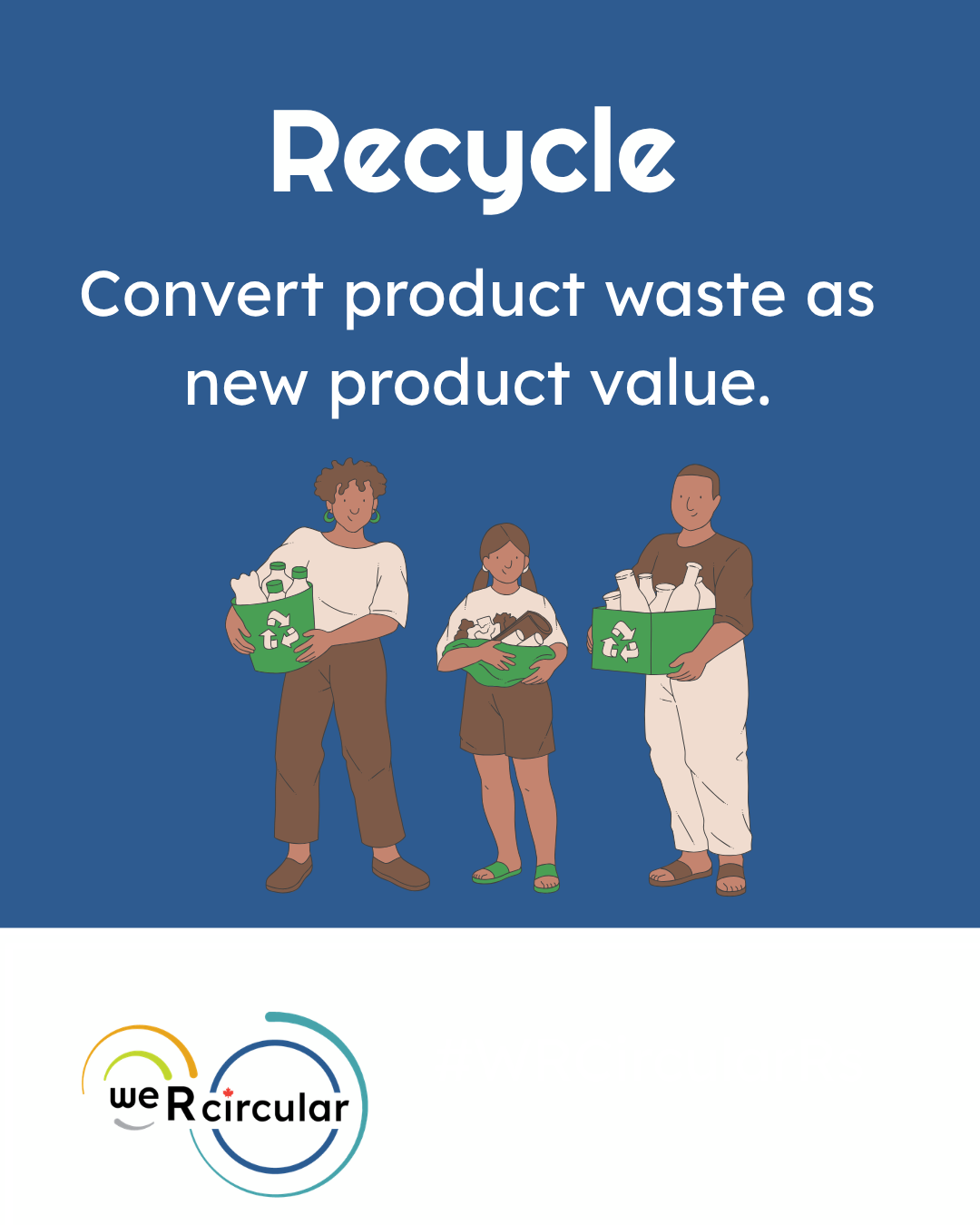 Recycle
Principle: Process waste into new products or materials that can be used again. Convert product waste into new product value.
Recycling is the circular action most of us already practise — and it matters. But it’s important to understand that recycling still requires energy to process materials, and the resulting material is often of lower quality than the original. That’s why it sits near the bottom of the hierarchy. The goal is to reach recycling as rarely as possible, because we’ve kept materials in use through higher-level actions first.
Recycling also requires care. Contaminated recycling loses its value entirely, which is why knowing what belongs in the blue bin — and what doesn’t — is worth the effort.
In Stouffville: The Town of Stouffville partners with Recycle Batteries Canada to make battery recycling easy and responsible. Old batteries leak toxins into soil and water when they end up in landfill — recycling them keeps those materials safely in use. Drop-off bins are available at the Leisure Centre, Municipal Offices, Stouffville Arena, and Stouffville Clippers Complex.
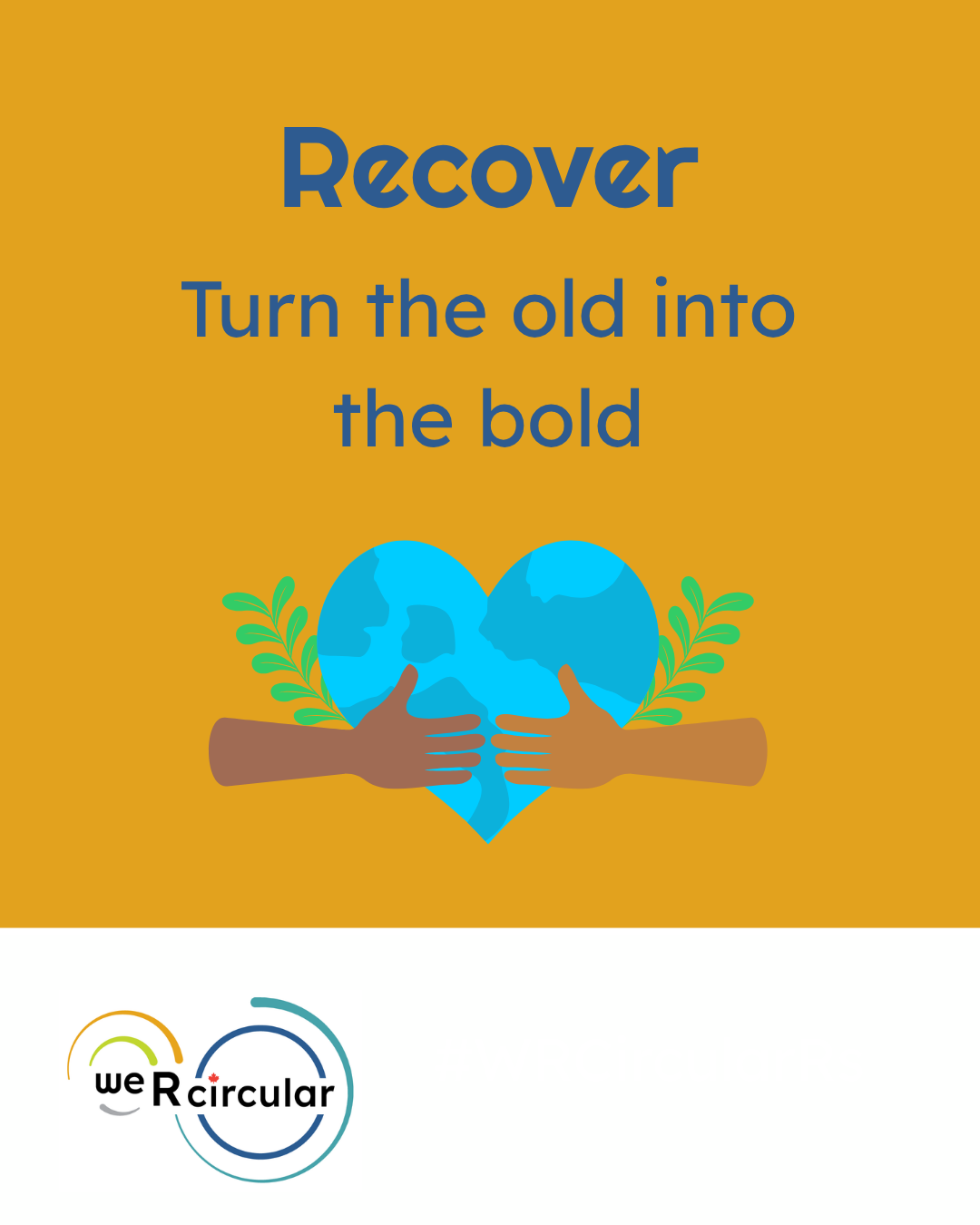 Recover
Principle: Process waste to recover value that would otherwise be lost entirely. This sits just above landfill — it’s the last meaningful stop before materials are gone for good.
Recovery captures value from materials that have already reached the end of their useful life in their current form. It doesn’t prevent waste from happening, but it prevents total loss.
In York Region: Habitat for Humanity ReStore with locations in Newmarket and Vaughan, recovers construction waste — flooring, lighting, cabinetry, kitchen and bath fixtures — and gives it a second life through their retail store. What might otherwise go to landfill becomes someone else’s renovation material. And since all proceeds support the construction of new Habitat for Humanity homes, every purchase directly helps lower-income families own a home in the community.
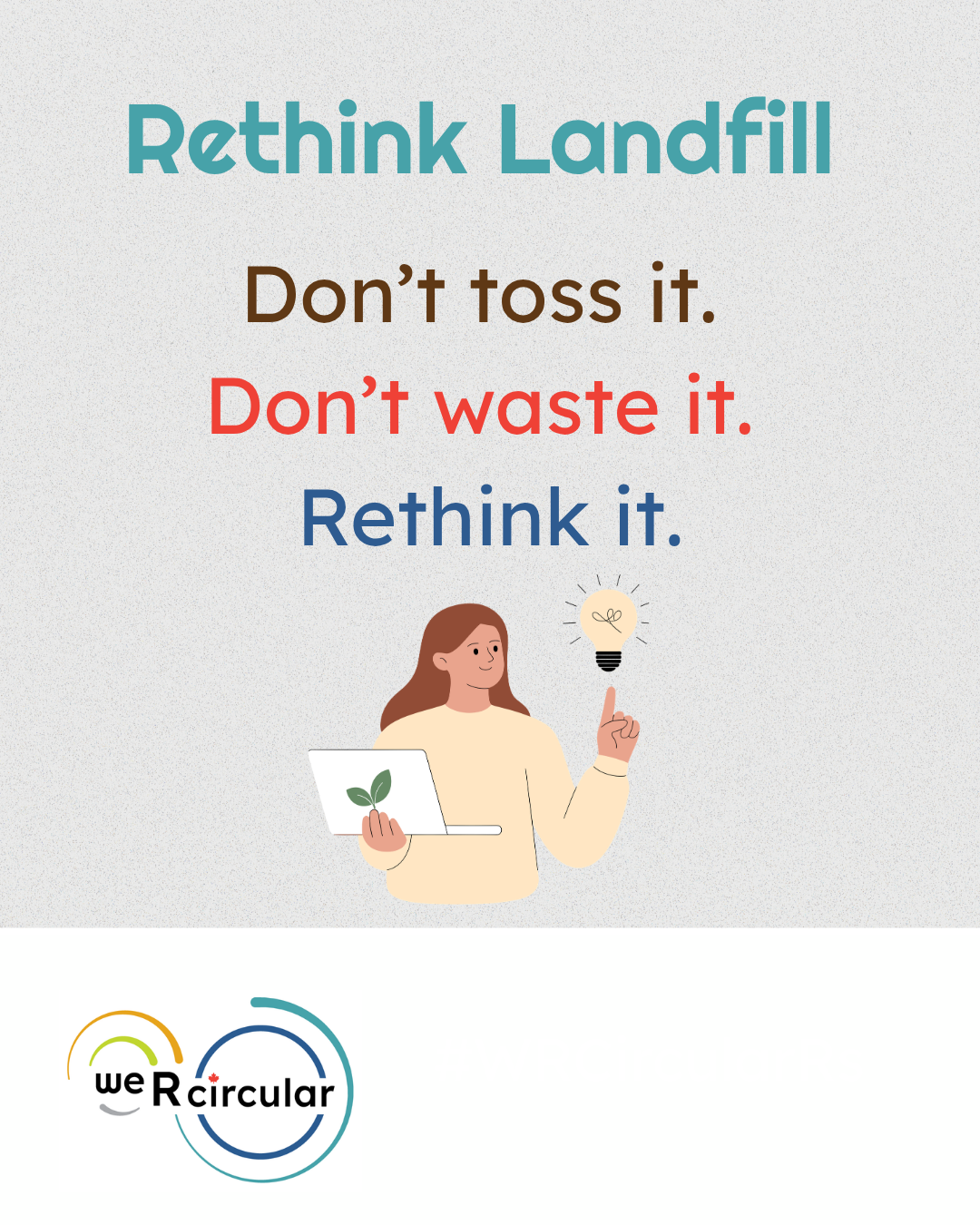 Rethink Landfill
Landfill is not a solution. It’s a failure — of design, of systems, and of choices made higher up the funnel.
The cost of managing landfill waste keeps climbing, and the environmental damage — from leaching toxins to greenhouse gas emissions — is real and lasting. The circular economy’s entire purpose is to shrink landfill to the smallest possible fraction of how we handle materials.
York Region’s SM4RT Living Plan gives communities a foundation to build on — a regional framework for diverting more waste, reducing costs, and moving toward a circular economy neighbourhood by neighbourhood.
Don’t toss it. Don’t waste it. Rethink it.
Your community is already circular
Stouffville is one example — but communities like it exist across Canada. Businesses are already repairing, refilling, reusing, recovering, and redesigning. Most of them are doing it quietly, without the language to describe the full value of what they offer.
If you’re a community member: Look around you. The businesses in this post are the kinds of businesses already operating near you. Seek them out. Choose them. Every purchase you make from a circular business is a vote for a different kind of economy.
If you’re a business owner: If you recognised yourself in any of these Rs — if your business repairs, reuses, refills, refurbishes, or finds new life for materials — you’re already part of this movement. weRcircular helps businesses like yours tell that story clearly, so the people in your community can find you, understand you, and keep coming back.
Find out how weRcircular can help you tell your story →
Circular doesn’t happen on its own. It starts with what we choose.
weRcircular is a registered Canadian not-for-profit based in Stouffville, Ontario. We connect circular economy businesses with the communities around them through communications built together, tested with real people, and designed to build lasting trust